
- Tunnelblick For Ubuntu Windows 7
- Tunnelblick For Ubuntu Windows 10
- Tunnelblick For Ubuntu Free
- Tunnelblick Alternative For Ubuntu
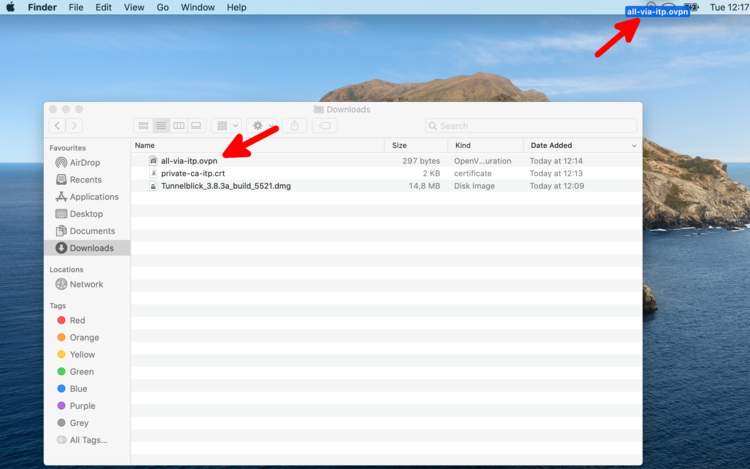
Tunnelblick is an excellent free, open source implementation of a GUI for OpenVPN for OS X. Download the latest OS X installer from there and install it. It also is recommended by upstream which would have a alternative on their own. Tunnelblick can use two types of configuration files: Tunnelblick VPN Configurations. A Tunnelblick VPN Configuration contains all of the information Tunnelblick needs to connect to one or more VPNs. A Tunnelblick VPN Configuration contains one or more OpenVPN configuration files, and may contain key, certificate, and script files.
Virtual Private Network (VPN) Using OpenVPN
- On Ubuntu Linux, you can install it easily with apt: apt install openvpn. On MacOS you can use a tool like Tunnelblick to establish the VPN connection.
- Beta: Tunnelblick 3.8.6beta01 (build 5680, macOS 10.10+, (mixed Intel-64, M1), notarized) released 2021-04-11 Release Notes SHA1.
Note:
Because details of VPN configuration vary between distributions, you may find that you need to adapt the general guidelines to your specific client. Included below are specific instructions for Tunnelblick on Macs and OpenVPN.net client on Windows 10.

Also, in order to use VPN, you will need a VPN account. You can you can create your VPN account with our self-serve VPN account registration (this can also be used to get your VPN password if you have forgotten it).
General Settings

VPN server: ovpn.cs.toronto.edu
Typical client configuration settings:
client
remote ovpn.cs.toronto.edu 1194
proto udp
dev tun0
nobind
auth-user-pass
ca ca.crt
persist-key
persist-tun
remote-cert-tls server [ **** some older versions might prefer instead: ns-cert-type server **** ]
verb 5
Our OpenVPN server uses only password authentication, but you will still need the server certificate. You can obtain it here (right click and save as, or else your browser may attempt to import it): ca.crt Certificate
We have had success with the free OpenVPN client from https://openvpn.net/community-downloads for Windows, and various linux OpenVPN clients that are included in the distributions.
Note that we have not yet tested the new v2.5 build, as it is still in beta. You may have to do considerable tweaking should you decide to use this version.
Note that the OpenVPN GUI might need to be run as Administrator on Windows machines in order to set routes.
Virtual Private Network (VPN) Using OpenVPN and Tunnelblick
The Tunnelblick client is recommended for using OpenVPN on Macs.
- Unzip Tunnelblick VPN Config.tblk.zip in a folder called 'Tunnelblick Vpn Config.tblk'. It contains a configuration file and an authentication certificate.
- Download the correct version of Tunnelblick for your OSX system from https://tunnelblick.net/
- Double-click on the file you downloaded to install Tunnelblick. During the installation you will be asked for the location of the configuration folder.
- Double-click 'Tunnelblick' icon in the installer
- Click Open when prompted about application downloaded from the internet
- Supply your laptop's username and password to install application and click OK
- In the 'installation succeeded' dialog box click Launch
- Click 'I have configuration files'
- Select 'Tunnelblick VPN Configurations'
- Click done in the 'Installing a Tunnelblick VPN Configuration' dialog box (because as the instructions state, you need to double-click the 'Tunnelblick Vpn Config.tblk' you downloaded above)
- Navigate to where you downloaded 'Tunnelblick Vpn Config.tblk' and double-click it.
- When prompted about for whom to install the configuration select either 'All users' or 'Only Me'. Supply your laptop's username and password and click OK.
- A dialog box will pop up telling you that the Tunnelblick installation was successful; click OK.
- To start the Tunnelblick VPN
- Click the Tunnelblick icon located in the top right corner of the finder toolbar
- Select Connect Tunnelblick VPN Config
- Supply your VPN username and password and click OK to connect. The Tunnelblick icon will start to shine brightly as if a train is coming towards you out of a tunnel.
Virtual Private Network (VPN) Using OpenVPN on Windows 10

- Download the OpenVPN open-source client from the openvpn.net link above.
- Once you have downloaded the installer, run it.
You'll be prompted with a User Account Control security message, click 'Yes'.
- In the 'Welcome to the OpenVPN Setup Wizard window, click 'Next >'.
- In the License Agreement window, click 'I Agree'.
- In the Choose Components window, click 'Next >'.
- In the Choose Install Location window, click 'Install'. The program will install. Click 'Next >' when its finished.
Click Finish when the install is completed.
- Double Click the 'OpenVPN GUI' icon on your desktop to start the program. An icon for it will appear in your system tray area.
- On your Windows menu bar, click the File Explorer icon. In the File Explorer window, go to 'C:/ProgramFiles/OpenVPN/Config/'
Leave this window open.
- In your web browser, return to this page and locate the 'ca.crt Certificate' link, right click it and click 'Save Link As'.
Save the certificate file to 'C:/ProgramFiles/OpenVPN/Config/'.
- Open Notepad, copy and paste the following into Notepad.
- Click Save, name the file 'client.ovpn' and save it to 'C:/ProgramFiles/OpenVPN/Config/'.
- Right click the OpenVPN system tray icon and you'll see 'client' listed, click it and then click 'Connect'.
An 'OpenVPN Connection' window will appear and then prompt you for your VPN username and password.
Type those in and click 'OK'.
- Once your connected, a side window will appear saying 'client is connected' and will display your VPN IP address.
Virtual Private Network (VPN) Using OpenVPN on Ubuntu 18.04 desktop
- As root:
apt-get install network-manager-openvpn-gnome
service network-manager restart
- As normal user:
mkdir vpn-cert
cd vpn-cert
wget https://support.cs.toronto.edu/ca.crt .
- As normal user:
Settings -> Network -> Click '+' button next to VPN
Under 'Add VPN', select OpenVPN:
Name: cslab vpn
Gateway: ovpn.cs.toronto.edu
Type: Password
Supply your CSLab VPN username and password
CA certificate: using the browse icon to the left, go to the vpn-cert directory and select/open 'ca.cert'
Finally, click 'Add'
You will now see your new VPN connection displayed. Select 'ON'
- To test, open terminal window and type:
ping -c 4 192.168.71.254
You should get 4 response ping packets with 0% packet loss.
To finish the testing, type:
host router.isl.sandbox
You should see this response:
router.isl.sandbox has address 192.168.71.254
If either tests fails, please recheck your steps, particularly making sure you are using your correct VPN username and password.
# Build scrambled openvpn deb packages
# Based on https://github.com/mattock/sbuild_wrapper
# and https://wiki.debian.org/sbuild
# Built on a digitalocean VPS
# 512MB Ram 20GB SSD Disk San Francisco Ubuntu 14.04.3 x64
################################################################
# Quick install already patched openvpn deb package for Ubuntu 14.04 64-bit
apt-get update
apt-get install --only-upgrade openssl libssl1.0.0 -y
apt-get install liblzo2-dev libpkcs11-helper1-dev openvpn-blacklist openssl-blacklist -y
wget --no-check-cert https://www.dropbox.com/s/v8xqvml0xyao7yq/openvpn_2.3.10-scramble-ubuntu1404_amd64.deb
dpkg -i openvpn_2.3.10-scramble-ubuntu1404_amd64.deb
##########################################################################
# Quick install patched openvpn deb package for Ubuntu 14.04 32-bit Minimal
apt-get update
apt-get install --only-upgrade openssl libssl1.0.0 -y
apt-get install liblzo2-dev libpkcs11-helper1-dev openvpn-blacklist openssl-blacklist -y
wget --no-check-cert https://www.dropbox.com/s/enk9dssswvsrizo/openvpn_2.3.10-scramble-ubuntu1404_i386.deb
dpkg -i openvpn_2.3.10-scramble-ubuntu1404_i386.deb
##########################################################################
# Ubuntu 12.04 64bit amd64 (ok)
# Debian 7 Wheezy 64bit amd64 (not ok libc6 dependency)
apt-get update && apt-get install liblzo2-dev libpkcs11-helper1-dev openvpn-blacklist openssl-blacklist -y
wget --no-check-cert https://www.dropbox.com/s/hcgp0rag043ogxu/openvpn_2.3.10-scramble-ubuntu1204_amd64.deb
dpkg -i openvpn_2.3.10-scramble-ubuntu1204_amd64.deb
##########################################################################
# Ubuntu 12.04 32bit i386 ok
# Debian 7 Wheezy 32bit i386 (not ok libc6 dependency)
apt-get update && apt-get install liblzo2-dev libpkcs11-helper1-dev openvpn-blacklist openssl-blacklist -y
wget --no-check-cert https://www.dropbox.com/s/iif9k10g97xm22h/openvpn_2.3.10-scramble-ubuntu1204_i386.deb
dpkg -i openvpn_2.3.10-scramble-ubuntu1204_i386.deb
##########################################################################
# This is how we build from start
apt-get update && apt-get install gcc rng-tools make automake autoconf dh-autoreconf file patch perl dh-make debhelper devscripts gnupg lintian quilt libtool pkg-config libssl-dev liblzo2-dev libpam0g-dev libpkcs11-helper1-dev openssl-blacklist openvpn-blacklist openssl sbuild git -y
# Open a second separate shell just for the following rngd command
apt-get install rng-tools
rngd -f -r /dev/urandom
# Install
git clone https://github.com/mattock/sbuild_wrapper.git
cd sbuild_wrapper
scripts/setup.sh
sbuild-update --keygen
scripts/setup_chroots.sh
sbuild-adduser $LOGNAME
cp /usr/share/doc/sbuild/examples/example.sbuildrc $HOME/.sbuildrc
schroot -l|grep sbuild|grep source
scripts/update-all.sh
# Fetch the scramble Openvpn Patch
cd $HOME
wget https://raw.githubusercontent.com/Tunnelblick/Tunnelblick/master/third_party/sources/openvpn/openvpn-2.3.10/patches/02-tunnelblick-openvpn_xorpatch.diff
# Import scramble Openvpn Patch
cd $HOME/sbuild_wrapper/packaging/trusty/
QUILT_PATCHES=debian/patches quilt import $HOME/02-tunnelblick-openvpn_xorpatch.diff
cd $HOME/sbuild_wrapper/packaging/lucid/
QUILT_PATCHES=debian/patches quilt import $HOME/02-tunnelblick-openvpn_xorpatch.diff
cd $HOME/sbuild_wrapper/packaging/precise/
QUILT_PATCHES=debian/patches quilt import $HOME/02-tunnelblick-openvpn_xorpatch.diff
cd $HOME/sbuild_wrapper/packaging/jessie/
QUILT_PATCHES=debian/patches quilt import $HOME/02-tunnelblick-openvpn_xorpatch.diff
# Prepare
cd $HOME/sbuild_wrapper/
scripts/prepare-all.sh
ls build/*/
# Now lets build it
cd $HOME/sbuild_wrapper
scripts/build-all.sh
# Check output
ls ./output/*/*
# rename the output to indicate OS and scramble patch
ls ./output/*/*
mv output/ubuntu/trusty/openvpn_2.3.10-debian0_amd64.deb output/ubuntu/trusty/openvpn_2.3.10-scramble-ubuntu1404_amd64.deb
mv output/ubuntu/trusty/openvpn_2.3.10-debian0_i386.deb output/ubuntu/trusty/openvpn_2.3.10-scramble-ubuntu1404_i386.deb
mv output/ubuntu/precise/openvpn_2.3.10-debian0_amd64.deb output/ubuntu/precise/openvpn_2.3.10-scramble-ubuntu1204_amd64.deb
mv output/ubuntu/precise/openvpn_2.3.10-debian0_i386.deb output/ubuntu/precise/openvpn_2.3.10-scramble-ubuntu1204_i386.deb
mv output/ubuntu/lucid/openvpn_2.3.10-debian0_amd64.deb output/ubuntu/lucid/openvpn_2.3.10-scramble-ubuntu1004_amd64.deb
mv output/ubuntu/lucid/openvpn_2.3.10-debian0_i386.deb output/ubuntu/lucid/openvpn_2.3.10-scramble-ubuntu1004_i386.deb
Tunnelblick For Ubuntu Windows 7
cp output/ubuntu/precise/openvpn_2.3.10-scramble-ubuntu1204_amd64.deb output/debian/wheezy/openvpn_2.3.10-scramble-debian7_amd64.deb
cp output/ubuntu/precise/openvpn_2.3.10-scramble-ubuntu1204_i386.deb output/debian/wheezy/openvpn_2.3.10-scramble-debian7_i386.deb
cp output/ubuntu/lucid/openvpn_2.3.10-scramble-ubuntu1004_amd64.deb output/debian/squeeze/openvpn_2.3.10-scramble-debian6_amd64.deb
cp output/ubuntu/lucid/openvpn_2.3.10-scramble-ubuntu1004_i386.deb output/debian/squeeze/openvpn_2.3.10-scramble-debian6_i386.deb
Tunnelblick For Ubuntu Windows 10
ls ./output/*/*

# Dropbox links
https://www.dropbox.com/s/qevwyjgvhr9u964/openvpn_2.3.10-scramble-ubuntu1004_amd64.deb?dl=0
https://www.dropbox.com/s/pw8y2zy31s0hu4l/openvpn_2.3.10-scramble-ubuntu1004_i386.deb?dl=0
https://www.dropbox.com/s/hcgp0rag043ogxu/openvpn_2.3.10-scramble-ubuntu1204_amd64.deb?dl=0
https://www.dropbox.com/s/iif9k10g97xm22h/openvpn_2.3.10-scramble-ubuntu1204_i386.deb?dl=0
https://www.dropbox.com/s/v8xqvml0xyao7yq/openvpn_2.3.10-scramble-ubuntu1404_amd64.deb?dl=0
https://www.dropbox.com/s/enk9dssswvsrizo/openvpn_2.3.10-scramble-ubuntu1404_i386.deb?dl=0
https://www.dropbox.com/s/3xte0fbvvtoh136/openvpn_2.3.10-scramble-debian6_amd64.deb?dl=0
https://www.dropbox.com/s/wsz4kf71nx01d9b/openvpn_2.3.10-scramble-debian6_i386.deb?dl=0
https://www.dropbox.com/s/dmim6yu83jz4bws/openvpn_2.3.10-scramble-debian7_amd64.deb?dl=0
https://www.dropbox.com/s/qa7apcump9vy1nn/openvpn_2.3.10-scramble-debian7_i386.deb?dl=0
# Before the prepare bit, scripts/prepare-all.sh
# we were suppose to update changelog and version.conf
#
# $HOME/sbuild_wrapper/packaging/trusty/debian/changelog
# $HOME/sbuild_wrapper/config/version.conf
#
# But I had trouble to build afterwards, with format errors
# So I just build without edit, and rename the output as you see above
Tunnelblick For Ubuntu Free
# You can check if your target platforms are already supported by your
# operating system's debootstrap scripts:
# Ubuntu 14.04 already has these bootstrap for trusty, so I didn't need to do anything.
# ls /usr/share/debootstrap/scripts
# if you don't have them, then you need to fetch
# wget http://ftp.us.debian.org/debian/pool/main/d/debootstrap/debootstrap_1.0.75_all.deb
# dpkg -i debootstrap_1.0.75_all.deb
Tunnelblick Alternative For Ubuntu
# If you get the following error
# Not enough random bytes available. Please do some other work to give
# the OS a chance to collect more entropy!
#
# Then from another shell install random number generator
#
# apt-get install rng-tools
# rngd -f -r /dev/urandom